PAPER CHROMATOGRAPHY - COMPOSITION OF A MIXTURE |
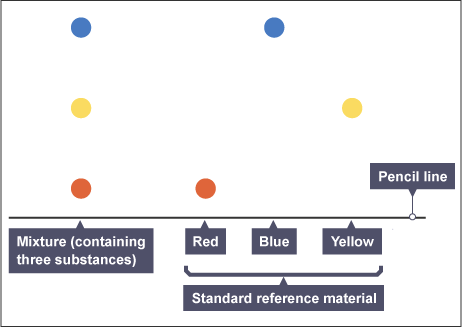 Diagram showing the Composition of an Ink using Paper Chromatography |
COMPOSITION OF A MIXTURE:
|
Monday, 10 July 2017
1.11: Understand How a Chromatogram Provides Information about the Composition of a Mixture

1.12: Understand How to Use the Calculation of Rf Values to Identify the Components of a Mixture
Rf VALUES: Used to identify the components of mixtures
s- Rf value of a particular compound is always the same
- This allows industries to use chromatography to identify compounds in mixtures
EQUATION:
sRf Value = Distance Moved by Compound ÷ Distance Moved by Solvent |
1.13: Practical: Investigate Paper Chromatography using Inks / Food Colourings
PAPER CHROMATOGRAPHY |
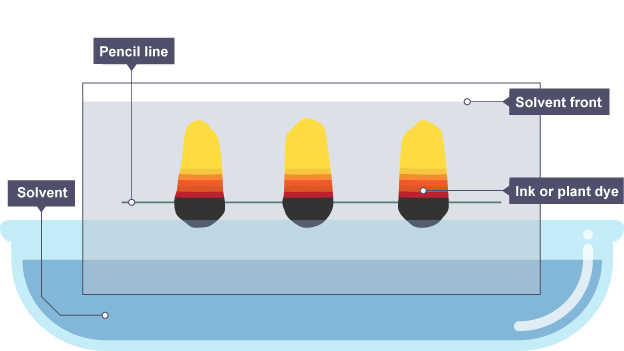 Diagram showing the Paper Chromatography of Ink and Plant Dye |
USE: To separate substances that have different solubilities in a given solvent (E.g Different coloured Inks mixed to form black ink) |
METHOD:
|
RESULTS:
|
1.15: Know the Structure of an Atom in Terms of the Positions, Relative Masses and Relative Charges of Sub-Atomic Particles
Atoms are made up of sub-atomic particles called Protons, Neutrons and Electrons 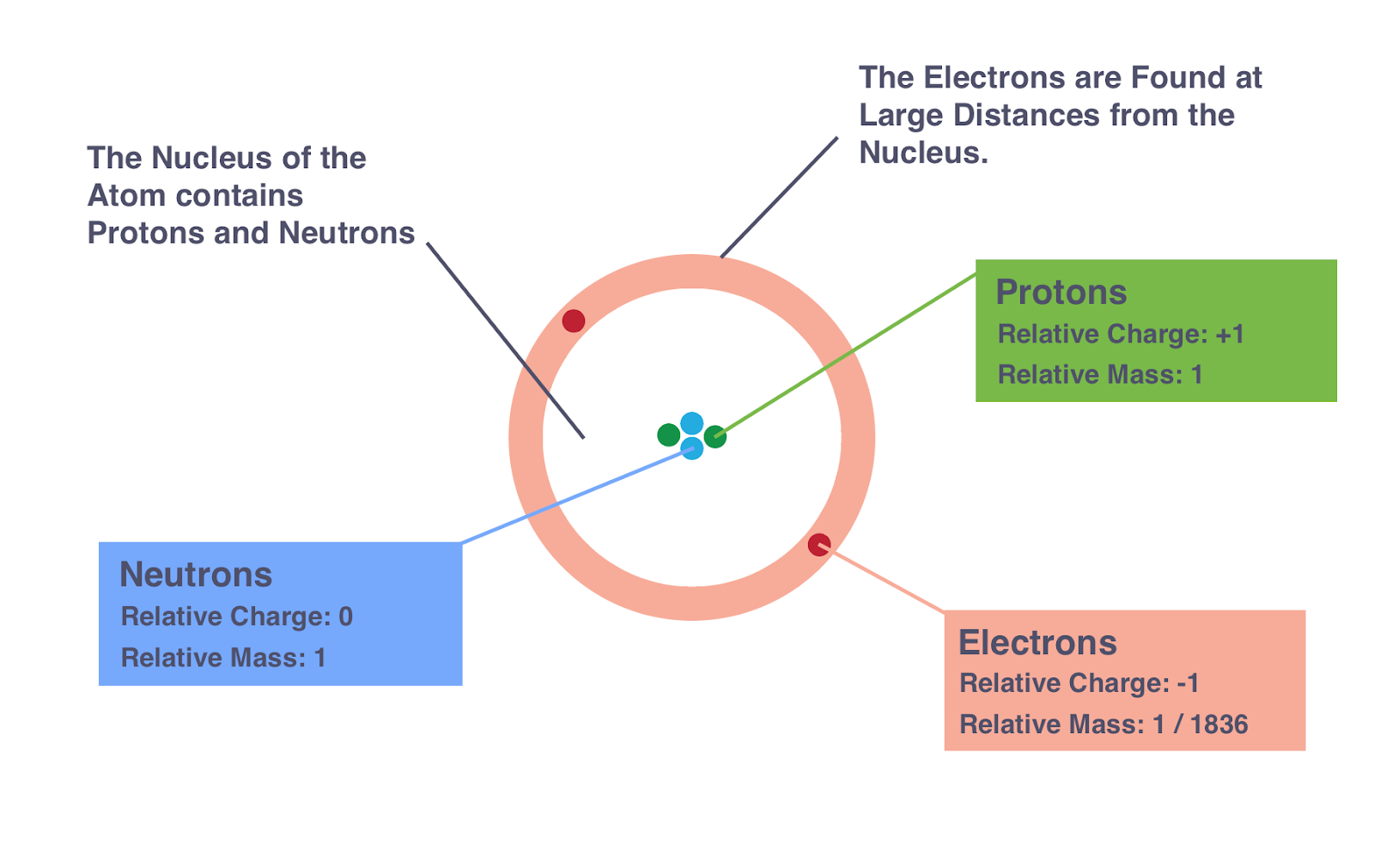
PARTICLE | RELATIVE CHARGE | RELATIVE MASS |
PROTON | +1 | 1 |
NEUTRON | 0 | 1 |
ELECTRON | -1 | 1/1836 |
1.14: Know What is Meant by the Terms Atom and Molecule
DEFINITIONS:
sTERM | DEFINITION |
ATOM | Smallest particle of an Element that consists of Electrons surrounding a Nucleus that contains Protons and Neutrons |
MOLECULE | Smallest particle of a substance that is formed when Atoms join together by chemical bonds |
1.17: Be Able to Calculate the Relative Atomic Mass of an Element (Ar) from Isotopic Abundances
ISOTOPES: Atoms of the same Element that contains the same Atomic Number but different Mass Number
sEQUATION:
s (% of Isotope 1 x Mass of Isotope 1 ) + ( % of Isotope 2 x Mass of Isotope 2) Ar = _______________________________________________________________ 100 |
s
Example:
s The Table Shows Information about the Isotopes in a sample of Rubidium
Use information from the table to calculate the Relative Atomic Mass of this Sample of Rubidium. Give your answer to one decimal place ( 72 x 85 ) + ( 28 x 87 ) ____________________________ = 85.6 100 Relative Atomic Mass = 85.6 |
1.16: Know What is Meant by the Terms Atomic Number, Mass Number, Isotopes and Relative Atomic Mass (Ar)
DEFINITIONS:
sTERM | DEFINITION |
ATOMIC NUMBER | Number of Protons in the Nucleus of an Atom |
MASS NUMBER | Sum of number of Protons and Neutrons in the Nucleus of an Atom |
ISOTOPES | Atoms of the same Element that contains the same Atomic Number but different Mass Number |
RELATIVE ATOMIC MASS (Ar) | Measure of the mass of one Atom of the Element |
Subscribe to:
Posts (Atom)
1.2: Understand the Interconversions between the Three States of Matter in Terms of: The Names of the Interconversions, How they are Achieved, the Changes in Arrangement, Movement and Energy of the Particles
INTERCONVERSIONS BETWEEN STATES OF MATTER: Diagram showing the interconversions between the states of matter EXPLANATION: CHANGE EXPLANATION...

-
EXOTHERMIC ENDOTHERMIC Diagram showing Enthalpy Change during an Exothermic Reaction Diagram showing Enthalpy Change during an Endothermic R...
-
LONG - CHAIN HYDROCARBONS: Molecule with large number of hydrocarbon molecules SHORT - CHAIN HYDROCARBONS: Molecule with small number of hyd...
-
WRITING BALANCED CHEMICAL EQUATIONS: s When balancing equations, there needs to be the same number of Atoms of each Element on either side o...
